By V.Hughes1, A, Seabrook1, C, Gamble1, Dr Lee Ann Tejada2, Prof Wayne Patrick2
1. Winechek laboratories, 2. University of Wellington
Getting an indication of vineyard nutrition deficiencies enables a winemaker to avoid dealing with stuck and sluggish fermentations. It also allows the winemaker to prevent H2S formation and maximise fruity aromas in the final wines. Nitrogen is the main growth factor present in grapes for yeast growth and fermentation, and can impact the production of aroma compounds. Its deficiency can lead to the production of hydrogen sulphide (H2S) and stuck or sluggish fermentations (Jiranek et al 1995). Yeast require nitrogen for cell growth and efficient fermentation. In the first third of fermentation the yeast will build in biomass sufficient to metabolise the level of sugar present. Yeast biomass is also impacted by whether the strain has a high or low nitrogen requirement. Yeast assimilable nitrogen (YAN) can be found in two forms; mineral or organic. In grapes, mineral nitrogen makes up one third of the total nitrogen, whilst the organic fraction makes up two third to three quarters of the grape derived of YAN. Conducting this test requires two measurements and a spectrophotometer which can require laboratory skills, additional cost and time. This project provides insight on to the novel method developed in conjunction with the university of Wellington to create a simple, single reaction that will enable winemakers to measure YAN with the simple addition of a tablet.
The overall goal of this project was to construct a three-enzyme based biosensor to estimate yeast assimilable nitrogen in grape samples with a simple colorimetric readout. The production of a blue pigment by blue pigment synthetase A (BspA) will be employed as the colorimetric readout for the biosensor. BspA will be also used to sense glutamine, which is one of the major components of YAN. And in conjunction with two other enzymes ammonium sensing enzyme, glutamine synthetase will sense and convert ammonium from wine grape samples to glutamine and Arginine sensing enzyme which will sense arginine and their product, plus ammonia. The ammonium will then be feed of the cascade reaction yielding a proprietary blue dye.
Vintessential test kits were used to measure primary amino nitrogen and Ammonia to validate the 3 enzyme cascade.
Figure 1. Schematic representation of the YAN biosensor enzyme cascade.
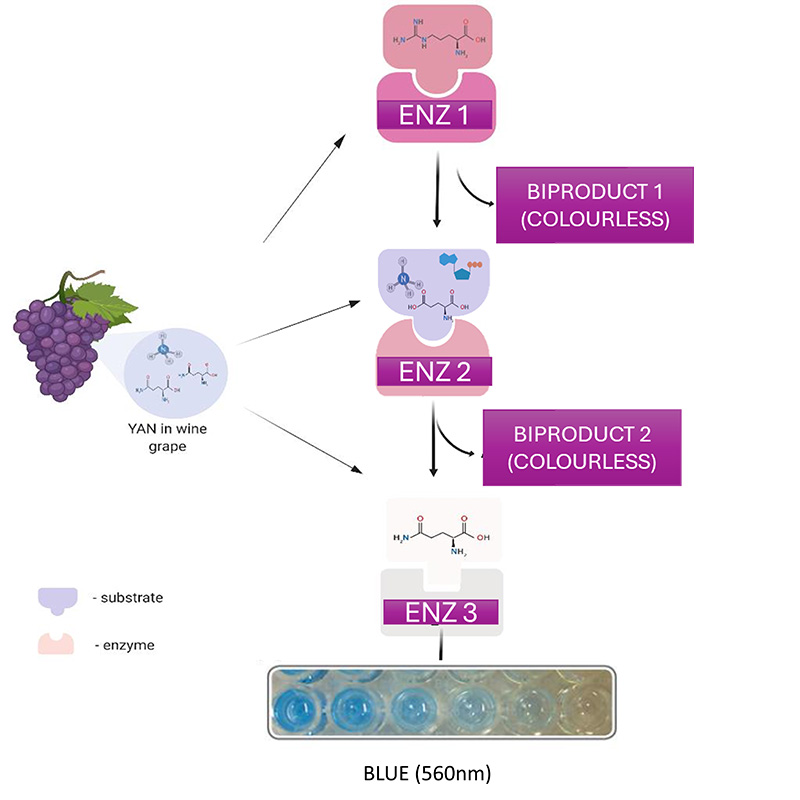
Figure 2. Visual representation of increasing amounts of YAN using the blue pigment.
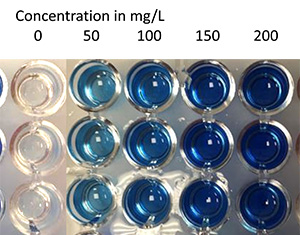
The YAN biosensor provides a 3 step enzyme cascade correlated to the amount of YAN (both Ammonia and primary amino nitrogen). A tablet format will enable a winemaker to test for YAN easily, with one simple addition of a tablet to a wine or grape sample without the need for the sample to be decolourised. The validation data demonstrates excellent correlation with traditional 2 step measurements for YAN and can be easily employed in the vineyard without the need for advanced testing equipment or scientific expertise. This was developed and will be commercialised in conjunction with the University of Wellington.
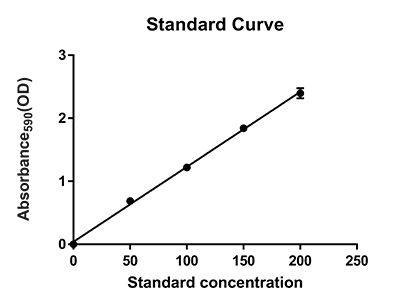
Table 1. Standard curve correlation of YAN to an increase in absorbance at 560 nm using the cascade reaction discussed here.