By Dr Alana Seabrook¹ and Dr Carly Gamble²
The terms ‘low intervention’ and ‘natural winemaking’ are widely used throughout the winemaking world. They convey to the customer that the winemaker has done the minimum possible to make the wine and that the wine is a natural expression of the vineyard and terroir (Bazzani et al. 2024).
Debate on the approval of the certification Vin Méthode Nature is ongoing at the European level, a denomination created in France to outline the natural winemaking process. (E. Parga-Dans et al. 2023).
It is generally up to the winemaker or marketing team to interpret what this means to them and the message they want to convey to their customer. The intention from a processing point of view is to use little or no processing aids or additives in the winemaking process as listed in FZANZ 4.5.1 Schedule 18 and 15 respectively. From a qualitative and analytical perspective, the outcomes will be dependent on many factors including grape quality and health, available resources in the winery, processing time and time to bottle. Often one of the crucial factors is the scientific understanding of the winemaker, as minimal intervention winemaking requires that deep level of understanding to give an opportunity to step in and fix a problem should it arise. Analysis at each stage of the process enables the winemaker to intervene if desired. In this article, key stages of the production process will be discussed to identify where low intervention winemaking can potentially create problems and the overall need for more analysis than usual.
Common additives and processing aids which may be removed from the winemaking process when using a low intervention approach:
There are a number of factors that can influence the overall winemaking process. These factors can stem from the vineyard, the grapes themselves, juice chemistry and environmental factors. The requirement to understand these factors is particularly important in natural winemaking to ensure that the winemaker can adhere as much as possible to their low intervention processes, whilst still ensuring a quality product.
The sanitary state of grapes can be a major contributing factor to spoilage and initial grape quality is therefore a major consideration in low intervention winemaking. If the berries are compromised due to rot or bird peck they often have a significantly higher microbial load of acetic acid bacteria as well as other bacteria and yeast that can compromise quality (Barata et al. 2012).
In years of high rot, it is possible to see levels of acetic acid above 0.8g/L to 1g/L and the level of malic acid completely degraded. These initial results have many possible consequences if attempting to use a minimalistic approach. Grey rot caused by Botrytis cinerea is frequently responsible for deteriorating grape quality. Grapes affected by this fungus contain laccase, a paradiphenol oxygen oxydoreductase (Dubernet, 1974) capable of oxidising polyphenols. Mould affected grapes may have toxins, pathogenesis-related enzymes and other toxic compounds produced by the grapes when presented with a fungal infection (Takemoto et al. 1991). It is possible that these factors may not only affect yeast multiplication but also fermentation (Bisson et al. 2005). In order to reduce these risks as much as possible, a natural winemaker should attempt to source high quality, sanitary fruit.
Another potential risk is the addition of SO₂ in the vineyard as a contributor to stuck or sluggish fermentation. A high level of total SO₂ will contribute to a stuck fermentation, as despite FSO₂ not being present in the free form, it can be bound to a fermentation intermediate acetaldehyde. Being actively aware of any vineyard SO₂ additions can allow winemakers to avoid stuck and sluggish fermentations and the interventionist steps associated with this.
Water additions to grapes at the crusher were legalised in 2017 by way of an amendment to the standard 4.5.1 Australian New Zealand Food Standards Code, enabling the addition of water to adjust the Baumé down to 13.5. But a starting Baumé of 17 and resulting Baumé of 13.5 can lead to a significant amount of dilution of not only sugar, but vitamins, minerals, lipids and amino acids. The limitations associated with a high starting Baumé therefore need to be balanced against the consequences of water addition, and potential nutrient additions that may then be required.
Following on from the above, juice chemistry including sugar level, SO₂, pH and volatile acidity may impact alcoholic fermentation. A very high sugar level may cause osmotic stress at the beginning of fermentation and lead to high levels of ethanol at the end of fermentation. Saccharomyces cerevisiae are sensitive to SO₂, ethanol >10% as well as very low pH and volatile acidity above 0.8 g/L of acetic acid. The levels of sensitivity are strain specific. Knowledge of these factors is essential if the aim is to intervene as little as possible.
Vine health aside, heat stress can also significantly impact juice chemistry. Baeza et al. (2019) found that there was a positive correlation between sugar content and available water, but also phenolic compound production, mainly in the form of anthocyanins (Downey et al. 2006). Several authors have reported links to increased levels of key aroma compounds such as norisoprenoids, carotenoids and monoterpenes (Reynolds and Wardle., 1989; Belancic et al. 1997). Other changes relative to grape maturation are the degradation of malic acid and the accumulation of tartaric acid. Whilst tartaric acid is not affected by heat stress, malic acid above 46°C is degraded (Lakso AN, Kliewer., 1975; Drappier et al. 2017). High concentrations of phenolic compounds are inhibitory towards yeast (Pastorkova et al. 2013). An in-depth understanding of juice chemistry, how it can be impacted by outside factors and what downstream processes can ultimately be affected are essential if taking a low intervention approach. This scientific understanding can enable a natural winemaker to make better decisions throughout and therefore a better quality product as a result.
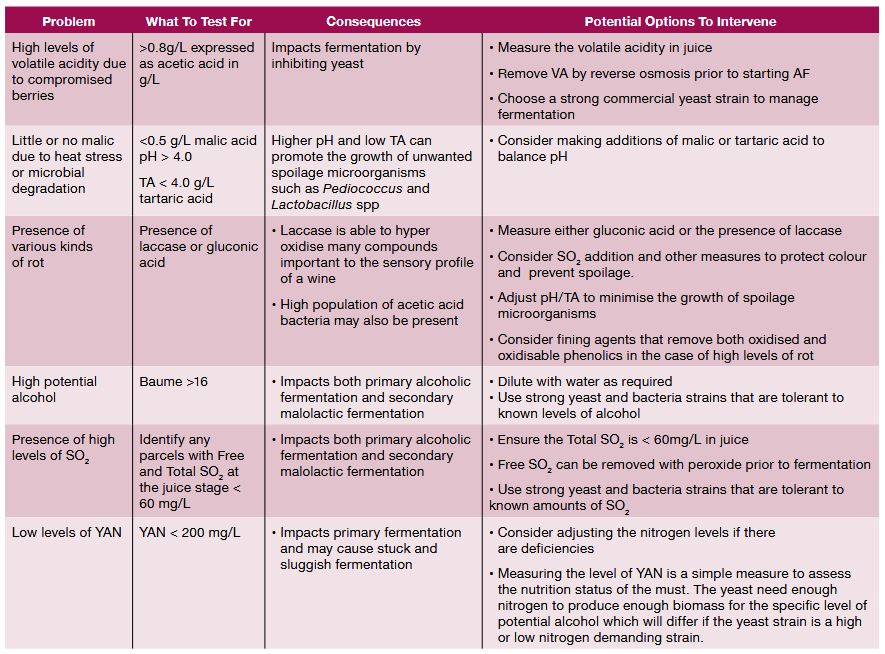
Table 1. Critical parameters in low-intervention winemaking which can impact quality
Fermentation in wine is initiated by the multiplication of yeast species in grape juice, either inoculated or spontaneously developed. Typically strains of Saccharomyces cerevisiae are inoculated into must with desirable characteristics in terms of alcohol tolerance, fermentation kinetics and sensory impact. In low intervention winemaking the natural yeast present on the grapes and winery equipment are often left to proliferate without the use of commercial S. cerevisiae. Their role is to metabolise the sugar present and convert it to alcohol and carbon dioxide. In perfect ripening conditions, the ratio of fermentable sugars glucose and fructose is 1:1. As the grapes head towards over ripeness the ratio can change to favour fructose over glucose (Kliewer WM., 1967; Shiraishi M., 2000). Saccharomyces cerevisiae metabolises glucose more easily than fructose (Guillaume et al. 2007). As a consequence, fructose is often the main sugar left in a stuck or sluggish fermentation. A higher fructose to glucose concentration in stuck wines is likely the consequence and not the cause of a stuck fermentation. The limiting factor is the transportation of sugar into the cell (Luyten et al 2002), and in the presence of ethanol it is even harder for yeast to take up fructose (Berthels et al. 2007). Factors affecting fermentation are discussed below, and should be considered if selecting a natural fermentation process.
The pre-fermentation stage has the most microbial variation in the winemaking process. Many Acetobacter spp., non-Saccharomyces and Saccharomyces species of yeast, lactic acid bacteria, mould and fungi may be present (Table 2). The method of harvesting, state of sanitation of both equipment and grapes, temperature and, critically, length of time before processing will affect the presence of these populations. These factors are even more important when fermentation is left to commence naturally (spontaneous fermentation) as indigenous microflora have more time to proliferate.
Typically, species such as Hanseniaspora, Kloeckera, Pichia, Candida, and Metschnikowia genera dominate the first stage of uninoculated fermentations. Species such as Torulaspora delbrueckii, Kluyveromyces spp., Zygosaccharomyces bailli, Schizosaccharomyces pombe and Issatchenkia spp., may also be present (Table 2). These species start the fermentation and proliferate up to 10⁶- 10⁷ cells/mL until factors such as alcohol, nutrient limitation and competition cause a decline in population. Whilst some of these non-Saccharomyces species give desirable attributes to a wine, some are more likely to produce undesirable sulfur compounds and/or volatile acidity (Albertin et al. 2014). Typically, half way through the fermentation, Saccharomyces cerevisiae takes over the fermentation (Comitini et al. 2017).
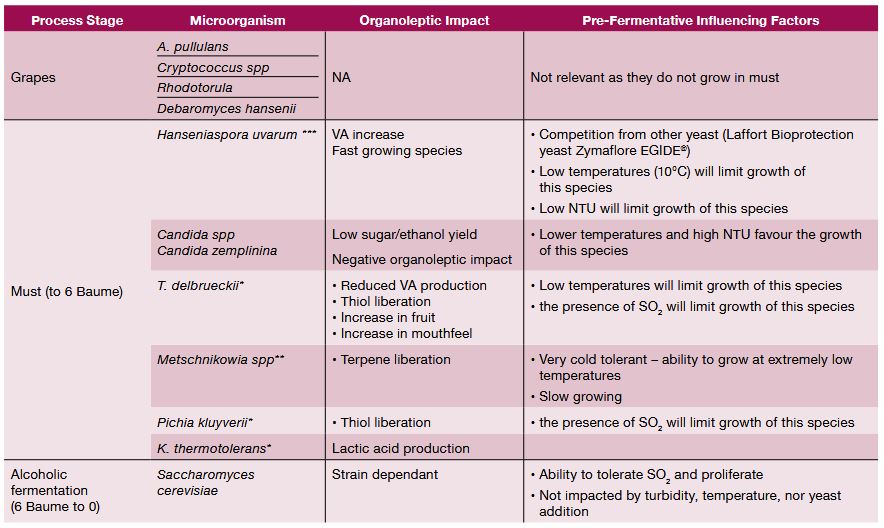
Table 2. Effect of specific microorganisms on wine quality *** ; ** and * : increasing detection in must (Albertin et al 2014
The temperature of fermentation can promote the growth of different microorganisms, even when a strong commercial S. cerevisiae yeast is inoculated. The ability to cool down ferments controls the growth of aerobic acetic acid bacteria which can produce volatile acidity. Higher temperatures have also been demonstrated to promote the growth of H. uvarrum, whereby growth has been correlated to the production of acetic acid (Albertin et al. 2014). Lactic acid bacteria are negatively impacted by temperatures above 32°C in the presence of alcohol (Maitre et al. 2014). Therefore long drawn out malolactic fermentations are often a risk factor if the viability of the LAB is compromised. Residual sugar due to stuck or sluggish alcoholic fermentation can promote the growth of the spoilage yeast Brettanomyces bruxellensis (Silva et al. 2004).
A better understanding of microbial variation, fermentation chemistry and the impact of temperature on fermentation can greatly assist a winemaker when using a natural approach. Considering these factors can greatly assist in avoiding stuck or sluggish ferments and the growth of spoilage microbes.
In the case of white and rosé wines, every process in the harvesting and processing stage that allows phenolic compounds to oxidise, will impact on the type of phenolics present in the must and the quantity to be considered for removal. The varietal itself will also impact this. Critically, if these phenolics aren’t removed, they can oxidise compounds responsible for:
Low intervention winemaking may point to the removal of fining agents completely. Further to the impacts of low or no fining, the absence of SO₂ will further accentuate this oxidation. Ideally, handpicking by night would minimise the amount of grape damage and subsequent enzymatic oxidation. Obviously, this is not practical or possible in the vast majority of cases, therefore managing the different must fractions is critical. This can be done in a variety of ways including;
In the case of a highly oxidised fraction, a broad spectrum of fining activities in higher dosages may be considered. However, for a free run fraction that has been protected from oxidation (and has lower levels of phenolic compounds available to oxidise) lower dosages of fining agent are normally sufficient. The more mechanical disruption and pressing the grapes undergo, the more phenolic compounds will be released into the juice. Consideration and understanding of the factors leading to oxidation will enable natural winemakers to conduct minimal intervention when it comes to fining agents.

Table 3. A summary of the risks around minimal intervention
Low intervention and natural winemaking approaches have become increasingly common and there is a growing trend amongst consumers to move towards more natural products and their perceived health advantages. The lack of definition and legislation around the use of these terms in the winemaking industry means that there is large variation in the different approaches to natural wine production.
For winemakers that are looking to produce a quality product with minimal intervention, there are a number of factors to consider. A scientific understanding of the impact of grape conditions, juice chemistry, microbial variation, fermentation and temperature will allow a winemaker to determine when intervention is more desirable than the alternative risk. Laboratory testing during the winemaking process can be an invaluable tool to gain the required scientific insight into the wine to assist in these intervention decisions. An overall understanding of the potential for risks and at what stage of the winemaking process they can be introduced will inevitably benefit the winemaker and the final product.
Albertin, W., Bely, M., Marullo, P., Masneuf-Pomarede, I., Miot-Sertier, C., Coulon, J., . . . Colonna-Ceccaldi, B. (2014). Oenological prefermentation practices strongly impact yeast population dynamics and alcoholic fermentation kinetics in Chardonnay grape must. International Journal of Food Microbiology, 178(C), 87-97.
Barata A, Malfeito-Ferreira M, and Loureiro V. 2012. The microbial ecology of wine grape berries. Int J Food Microbiol 153:243-259.
Baeza P, Junquera P, Peiro E, Lissarrague JR, Uriarte D, Vilanova M. Effects of Vine Water Status on Yield Components, Vegetative Response and Must and Wine Composition. In Advances in Grape and Wine Biotechnology 2019 Jun 25. IntechOpen.
Bazzani C, Maesano G, Begalli D, Capitello R. Exploring the effect of naturalness on consumer wine choices: Evidence from a survey in Italy. Food Quality and Preference. 2024 Apr 1;113:105062.
Belancic A, Agosin E, Ibacache A, Bordeu E, Baumes R, Razungles A, et al. Influence of sun exposure on the aromatic composition of Chilean Muscat grape cultivars Moscatel de Alejandría and Moscatel rosada. American Journal of Enology and Viticulture. 1997;48:181-18
Comitini F, Capece A, Ciani M, Romano P. New insights on the use of wine yeasts. Current Opinion in Food Science. 2017 Feb 1;13:44-9.
Zott K, Claisse O, Lucas P, Coulon J, Lonvaud-Funel A, Masneuf-Pomarede I. Characterization of the yeast ecosystem in grape must and wine using real-time PCR. Food microbiology. 2010 Aug 1;27(5):559-67.
Drappier J, Thibon C, Rabot A, Geny-Denis L. Relationship between wine composition and temperature: Impact on Bordeaux wine typicity in the context of global warming. Critical reviews in food science and nutrition. 2019 Jan 2;59(1):14-30.
Lakso AN, Kliewer WM. The influence of temperature on malic acid metabolism in grape berries: I. Enzyme responses. Plant Physiology. 1975 Sep 1;56(3):370-2.
Kliewer WM. The glucose-fructose ratio of Vitis vinifera grapes. American Journal of Enology and Viticulture. 1967 Jan 1;18(1):33-41.
Guillaume C, Delobel P, Sablayrolles JM, Blondin B. Molecular basis of fructose utilization by the wine yeast Saccharomyces cerevisiae: a mutated HXT3 allele enhances fructose fermentation. Appl. Environ. Microbiol.. 2007 Apr 15;73(8):2432-9.
Maitre M, Weidmann S, Dubois-Brissonnet F, David V, Covès J, Guzzo J. Adaptation of the wine bacterium Oenococcus oeni to ethanol stress: role of the small heat shock protein Lo18 in membrane integrity. Applied and Environmental Microbiology. 2014 May 15;80(10):2973-80.
Pastorkova E, Zakova T, Landa P, Novakova J, Vadlejch J, Kokoska L. Growth inhibitory effect of grape phenolics against wine spoilage yeasts and acetic acid bacteria. International journal of food microbiology. 2013 Feb 15;161(3):209-13.
Dubernet M. (1974) Recherches sur la tyrosinase de Vitis vinifera et la laccase de Botrytis cinerea. Thèse, Université de Bordeaux.
Reynolds AG, Wardle DA. Influence of fruit microclimate on monoterpene levels on Gewerztraminer. American Journal of Enology and Viticulture. 1989;40:149-154
Parga-Dans E, Vecchio R, Annunziata A, González PA, Enríquez RO. A certification for natural wine? A comparative analysis of consumer drivers in Italy and Spain. Wine Economics and Policy. 2023 May 9.
Shiraishi M. Comparison in changes in sugars, organic acids and amino acids during berry ripening of sucrose-and hexose- accumulating grape cultivars. Journal of the Japanese Society for Horticultural Science. 2000 Mar 15;69(2):141-8.
Silva P, Cardoso H, Gerós H. Studies on the wine spoilage capacity of Brettanomyces/ Dekkera spp. American Journal of Enology and Viticulture. 2004 Jan 1;55(1):65-72.
Takemoto JY, Zhang L, Taguchi N, Tachikawa T, Miyakawa T. Mechanism of action of the phytotoxin syringomycin: a resistant mutant of Saccharomyces cerevisiae reveals an involvement of Ca2+ transport. Microbiology. 1991 Mar 1;137(3):653-9.
¹ Winechek Operations manager
² Winechek Technical manager/State manager WA
- Grapegrower & Winemaker - January 2025 – Issue 732